
Prionailurus javanensis
Sunda Leopard Cat
Recorded Sightings
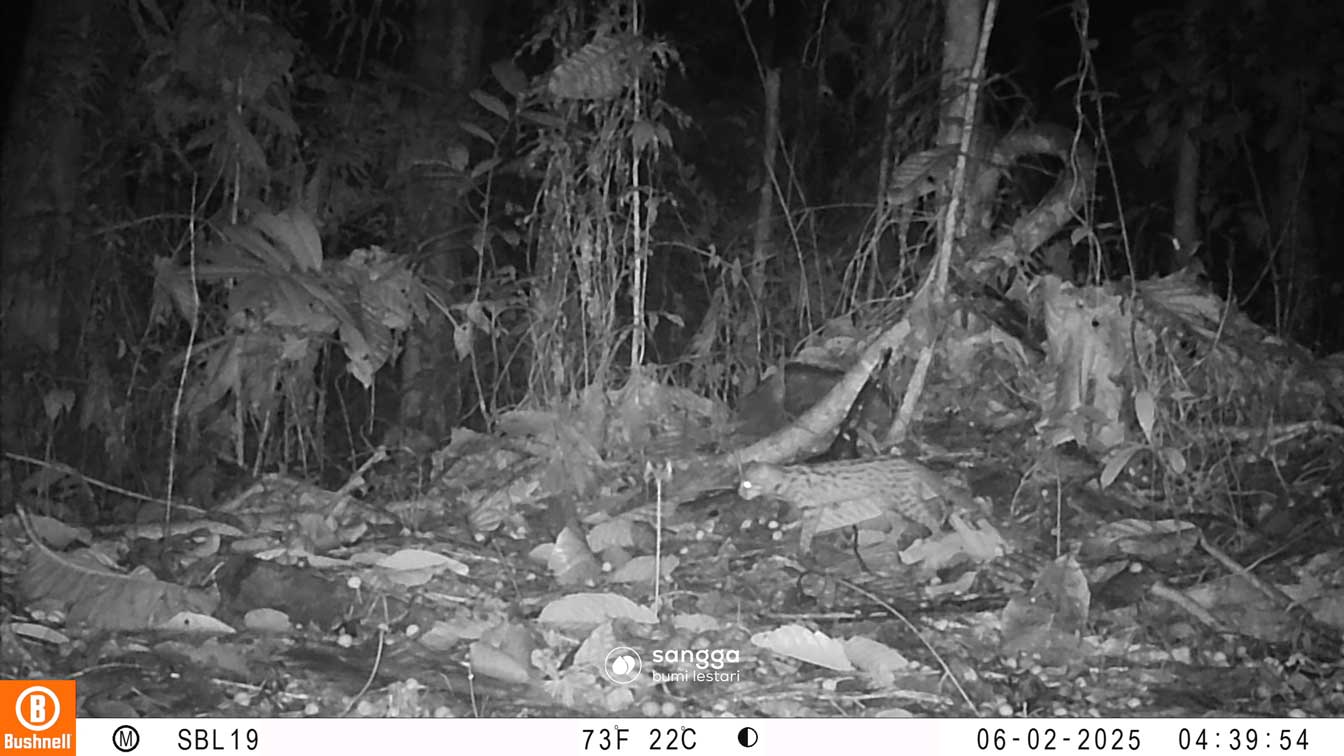
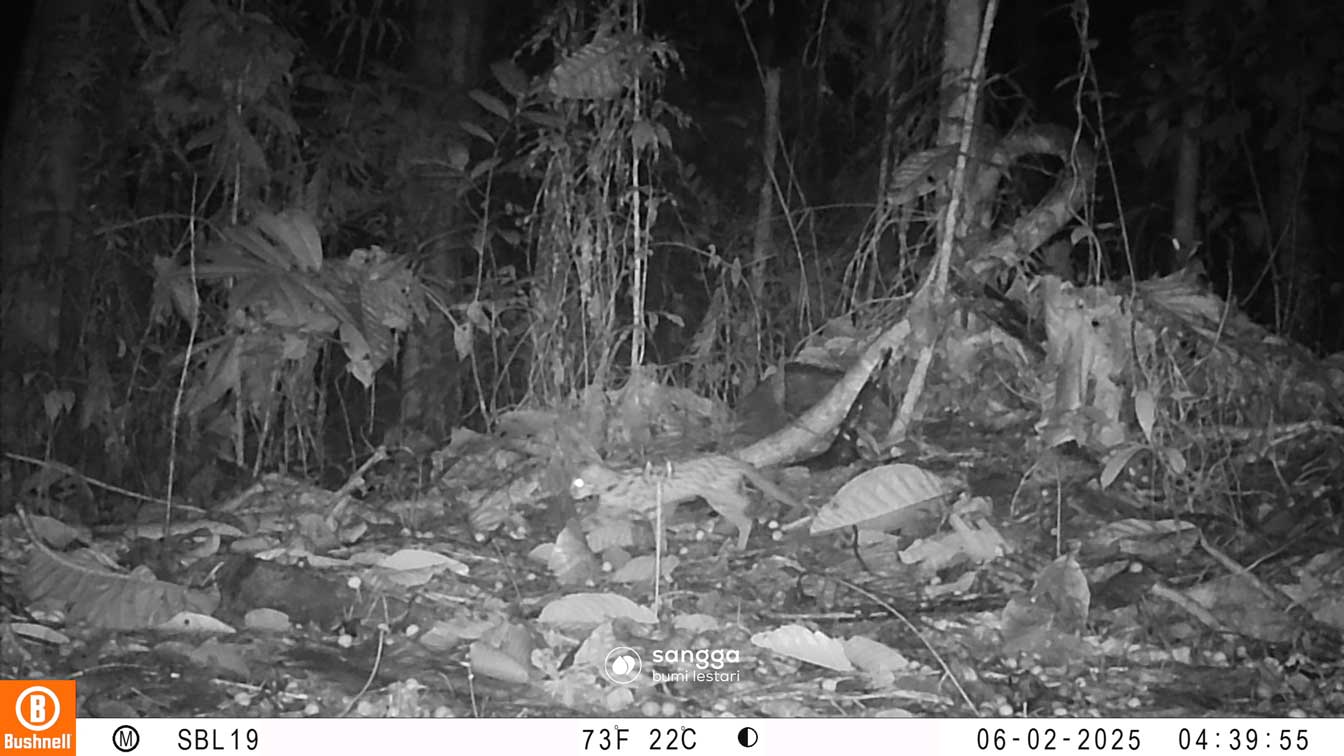
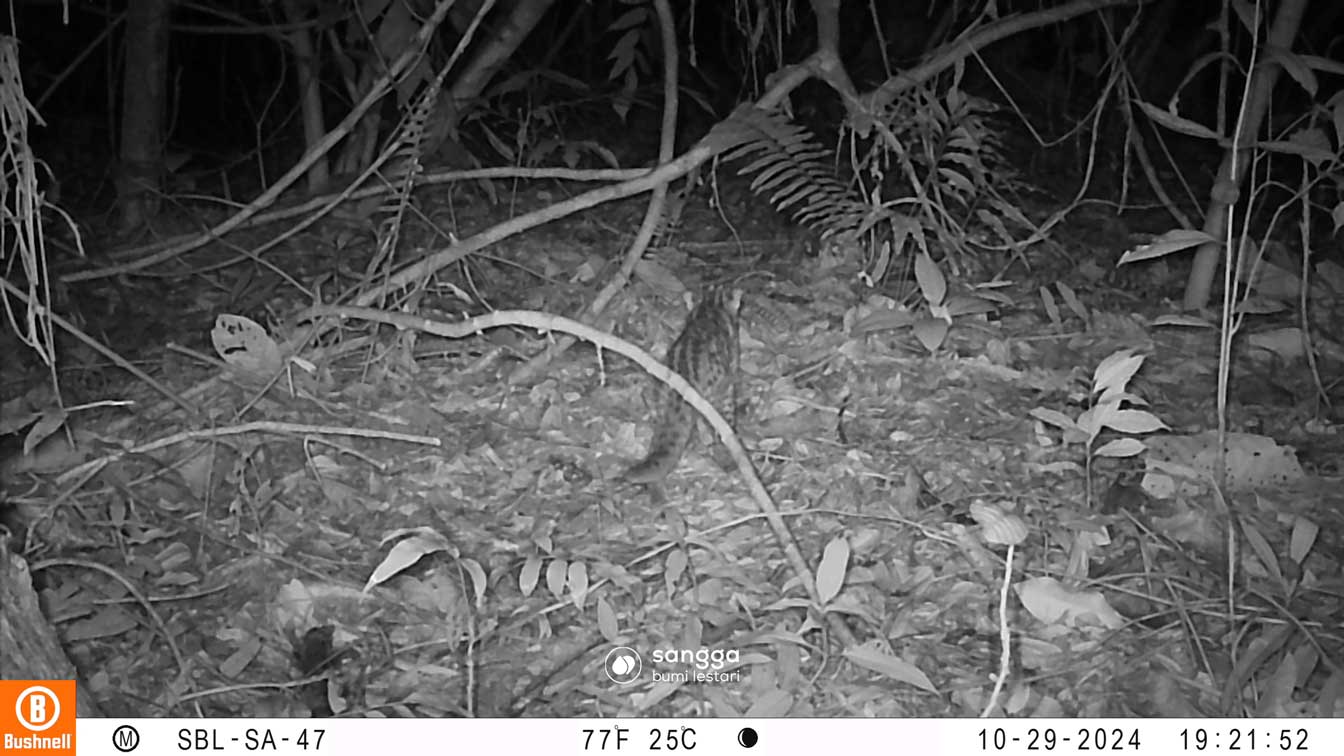
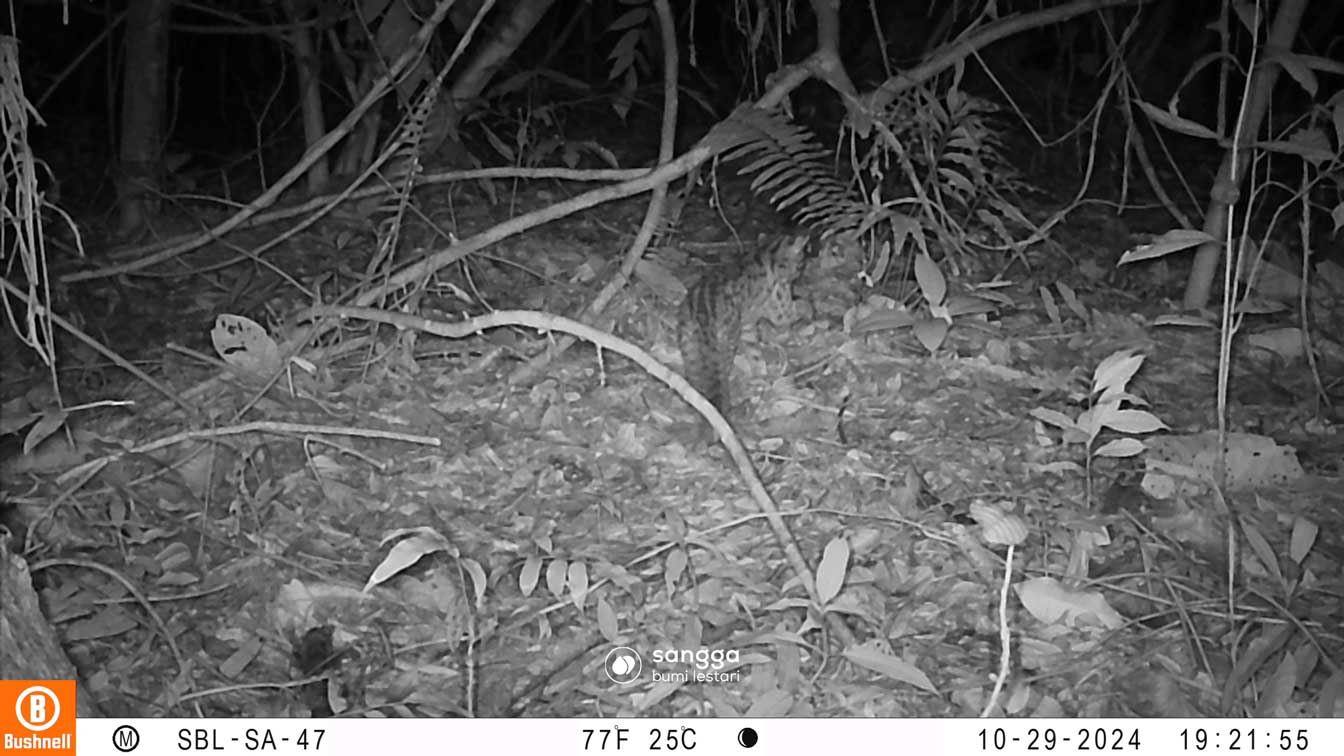
Description
The Sunda Leopard Cat is one of the smallest wild cats in Asia and is highly adaptable to a wide range of environments. This species shares a close evolutionary relationship with the Leopard Cat and Flat-headed Cat—three small cat species known for their affinity for water. All three possess partially webbed feet and a distinctive hunting technique: they maintain a firm grip on prey struggling to escape, a behavior believed to be an important adaptation for fishing cats.

Conservation Status: Least Concern
Ecological Profile
Lowland evergreen forests, mixed swamp forests, peat swamps, forest edges, and even agricultural mosaics. The Sunda Leopard Cat tolerates a degree of disturbance compared to other small cats and has been seen in oil palm plantations.
Highly adaptable and mostly nocturnal, though often active at dusk and dawn. In West Kalimantan it readily uses forest edges, peat swamps, plantations, and village mosaics, often near human settlements. The Sunda Leopard Cat has been seen travelling along trails, ditches, and plantation roads.
Primarily rodents, making it an important natural pest controller in agricultural landscapes. Also eats birds, frogs, reptiles, insects, and occasionally fish or small mammals, especially in wetland areas.
Physical Characteristics
Body and Build
The smallest and lightest of Kalimantan’s wild cats. Its slim body and long legs suit fast movement along forest edges, riverbanks, and disturbed habitats.
- Head–Body Length: ~40–55 cm
- Tail Length: ~20–30 cm
- Weight: ~2–5 kg
West Kalimantan Range
(Based on field observation data)